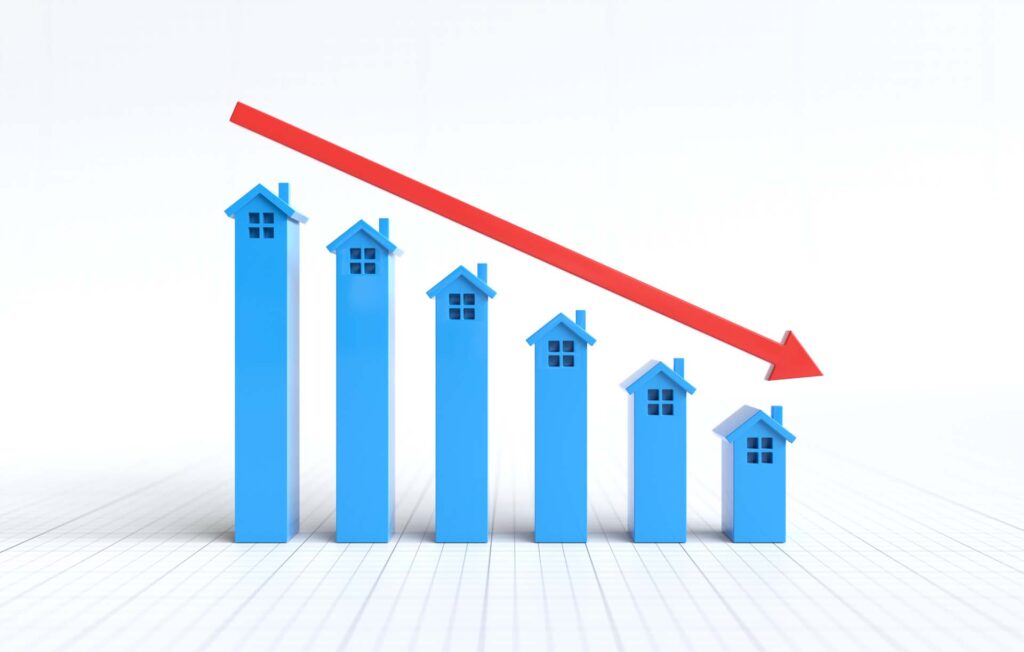
Conversion rate has been the default performance metric for multifamily marketing and leasing for as long as most operators can remember.
Inquiries to tours. Tours to applications. Applications to signed leases. The cascade of ratios that tells you how efficiently your leasing funnel is working.
It’s a useful metric. But it was built for a specific constraint — limited human capacity to engage with leads — and that constraint is rapidly disappearing.
Why the Metric Made Sense
When a leasing team had to manually handle every inquiry, manage every tour, follow up with every prospect, and process every application, prioritization was essential. There were only so many hours. The team couldn’t engage meaningfully with every lead, so they needed a way to filter — to focus attention on the inquiries most likely to convert.
Conversion rate told you how efficiently you were using that constrained capacity. High conversion meant your team was focusing on the right prospects. Low conversion meant you were wasting time on inquiries unlikely to result in a lease.
That logic is sound when human capacity is the binding constraint. The constraint is disappearing.
What AI Changes
AI-powered leasing agents can engage every lead, handle every inquiry, nurture every prospect through the funnel, and schedule every tour — without capacity limits. The leasing team doesn’t have to prioritize anymore, because the AI handles the volume that was previously impossible.
When the capacity constraint disappears, so does the logic behind optimizing for conversion rate.
In fact, optimizing for conversion rate in an AI-enabled leasing environment can actively hurt performance. If you’re filtering leads aggressively at the top of the funnel to maintain high conversion ratios, you’re discarding demand that AI could have engaged and qualified at essentially no marginal cost.
Senior executives engaging with this shift put it directly: when operators pay for leases rather than leads, the system optimizes for outcomes — and conversion rate stops being the headline metric. It rewards operators who open the funnel and let automation do the sorting, rather than filtering demand too early.
What the Right Metrics Look Like
The metrics that matter in an AI-enabled leasing environment are different.
Speed to lease — how quickly a prospect moves from first inquiry to signed lease — captures friction in the funnel more accurately than conversion rate alone. Reducing that timeline while maintaining qualification accuracy is a direct driver of performance.
Tour-to-lease ratio provides a better picture of how well qualified prospects are being identified before tours happen — ensuring that the human time invested in tours converts efficiently.
Qualified pipeline size — the total volume of prospects who meet real eligibility criteria at any given moment — captures the breadth of demand you’re actually working, not just the fraction that converts.
And increasingly, the metric that matters most is bad debt rate — the downstream measure of whether the qualification decisions made at the front of the funnel were actually accurate.
Where SuddenlySpaces Fits
At SuddenlySpaces, we’re building the qualification intelligence that makes these next-generation metrics meaningful.
Not just faster lead engagement, but more accurate lead qualification — real-time affordability modeling, predictive risk scoring based on actual financial behavior, and lease structuring that aligns with the full picture of a renter’s financial reality.
Conversion rate tells you how efficiently you filter. What you actually need to know is how accurately you qualify.
Join the landlord early access list at SuddenlySpaces.com
¹ Insights in this post are drawn from published research based on interviews with 20 senior multifamily executives — including COOs and CIOs across public REITs, NMHC top-10 third-party managers, and large owner-operators — conducted in late 2025 and early 2026. Source: 20for20 Annual Survey, 2026 Edition. Research by Dom Beveridge, TFT Consulting LLC. All rights reserved. SuddenlySpaces is not affiliated with 20for20.